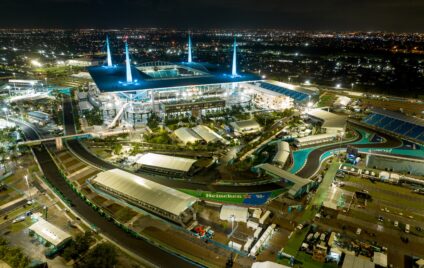
Art Basel Miami Beach 2025 arrived with the kind of velocity only Miami can hold. At the heart of the week, the Miami Beach Convention Center once again became the gravitational pull of the global art world. The fair marked its twenty third edition with nearly three hundred galleries representing more than forty countries and close to eighty thousand visitors moving through its aisles. It was a vivid reminder that in a noisy, fast-shifting cultural landscape, the art market still anchors itself in Miami every December.
Sales rose quickly. Several works priced in the six figures sold out in editions, and dealers spoke of collectors arriving ready to buy rather than wander. One booth quietly became a phenomenon, placing every edition of a one hundred thousand dollar work, a signal that the energy inside the fair was translating into true demand rather than surface-level attention.
Visually, the fair revealed its dual identity. On one side were booths arranged with museum level care, presenting framed paintings, sculptural statements, and historically grounded works that reinforced Basel’s reputation as a place where long term cultural value is shaped. On the other side were installations designed to stop visitors in their tracks and fill camera rolls for months to come. Those seeking the standout installations of 2025 would have found monumental sculptural anchors, conceptual works reflecting on coastal fragility, and striking contributions from Latin American and Caribbean artists who continue to expand Miami’s visual voice.
Across the street, Design Miami offered its own pulse. Now in its twenty first edition, the fair embraced the theme Make. Believe. under curator Glenn Adamson. The mood was one of world building rather than mere object display. Galleries presented sculptural chairs that felt like performance pieces, lighting that transformed entire spaces, and objects challenging the boundaries between craft, technology, and design. It was no longer a satellite to Basel but a central pillar of the week. Brand collaborations deepened the experience, with companies like Kohler and other fashion and lifestyle partners using design as a narrative medium rather than a commercial one.
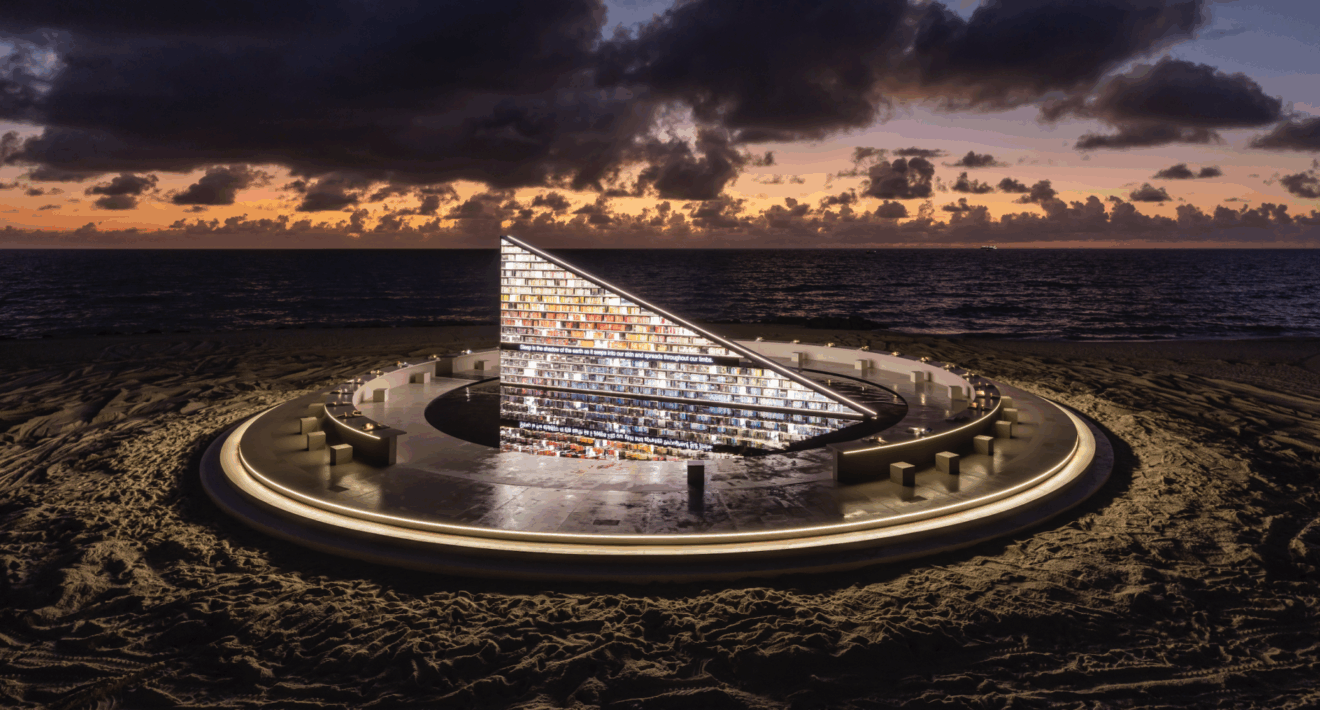
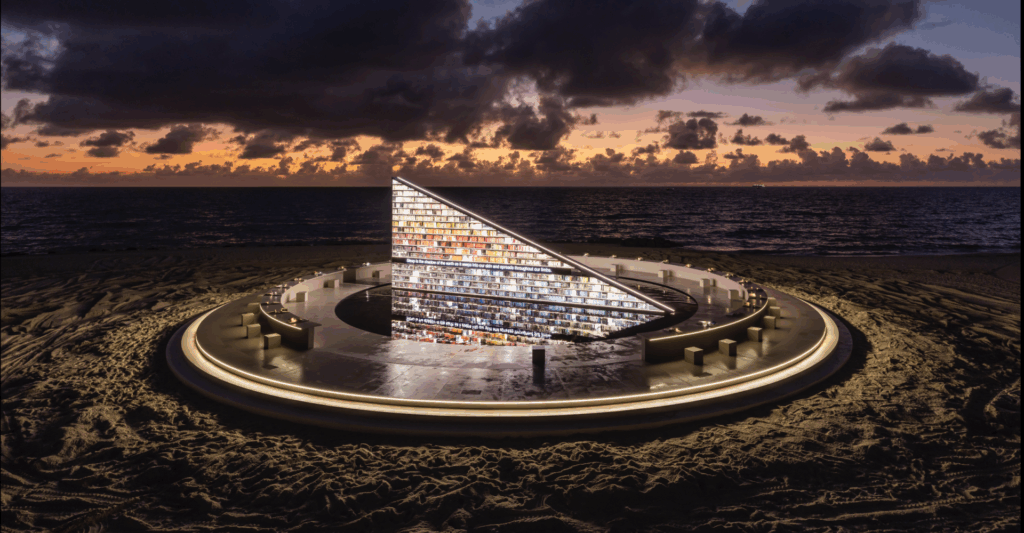
As the fairs stirred with activity, one of the week’s most poetic landmarks rose quietly on the sand behind Faena. Under the soft glow of early December light, a monumental outdoor library appeared as if it had always belonged there. Library of Us, a fifty foot rotating triangular sculpture by British artist Es Devlin, was commissioned for Faena Art’s tenth anniversary in Miami and immediately became one of the most contemplative moments of the week.
Set within a circular reflecting pool, the mirrored structure slowly turned, completing a rotation every ten minutes. Its shelves held twenty five hundred books that shaped Devlin’s life and creative path. Surrounding it, a seventy foot circular reading table invited locals, travelers, collectors, and wanderers to sit, read, and slow down. Some chairs stayed still, others gently rotated, creating an unspoken choreography between people, pages, and the ocean breeze.
In a week defined by speed, spectacle, and constant motion, Library of Us felt like a refuge. Guests traded screens for printed pages. Gallerists slipped away from VIP previews seeking quiet. The Faena beachfront, typically a stage for glamour, transformed into a communal reading room where strangers shared silence and sunlight.
Inside the Faena Cathedral, the experience deepened with the Reading Room, where staff curated a selection of texts illuminated by soft light and paired with recorded readings, offering a pause in the midst of the week’s frenzy. Nearby, the Faena Art Project Room revealed Devlin’s creative process through drawings, glass works, and moving images. And in a gesture that carried the installation beyond its physical structure, all twenty five hundred books will be donated to Miami schools and libraries, ensuring the artwork continues to circulate throughout the city long after the sand has been smoothed over.
For many, this installation reframed the entire week. Art did not have to be purchased, debated, or photographed. It could simply be lived.
Beyond the beachfront, immersive brand experiences defined this year’s tone. Cartier’s Into the Wild in the Design District became one of the most talked about events, a multi sensory journey through the history of the Panthère. Visitors moved through environments alive with archival sketches, high jewelry processes, and lush installations created with artist Clare Celeste. It felt less like an exhibition and more like a plunge into a collective memory.
Across town, Alex Prager’s Mirage Factory turned a former cinema into an ode to Hollywood mythmaking. From reimagined landmarks to vintage theatrical staging, the installation became a magnet for cameras and conversation. A surprise performance by Diana Ross at the opening dinner set a glamorous cadence, followed by a night hosted by Capital One and W Magazine that drew a blend of actors, musicians, and art world insiders.
Luxury timepieces also entered the cultural stage. TAG Heuer debuted its Carrera Chronograph x Fragment with Hiroshi Fujiwara, an edition of five hundred pieces that quickly became one of the week’s coveted objects. Hublot celebrated the anniversary of its Big Bang with a high energy event headlined by 50 Cent, merging horology with nightlife in a way that felt distinctly Miami. The larger theme was clear: brands did not merely participate in Art Week this year. They performed it.
As day turned to night, Miami transformed again. The fairs opened at noon, but the question on everyone’s lips was where the evening would lead. This year’s map of after dark destinations was a study in contrasts and excess.
LIV at the Fontainebleau offered a full Art Week program with sets by Tiësto, Black Coffee, and John Summit that packed the room with collectors, artists, and visitors seeking release. E11EVEN presented The Art of Nightlife, a lineup featuring Ty Dolla Sign, Diplo, 50 Cent, Marshmello, and Camelphat, each night unfolding like a new performance installation.
Space Basel took over the Miami Dade County Courthouse courtyard, where Black Coffee’s rhythmic sets turned the steps of a government building into a pilgrimage site for music lovers.
At the Miami Beach Edition, the Lauren Halsey and Google Shopping celebration brought together Kesha, members of HAIM, and a live performance by Ravyn Lenae before guests drifted to the Living Room by Cipriani for a night that blended art, tech, and culture, each room its own vignette.
If the days belonged to dealers and curators, the nights belonged to the city itself. Rooftops, pool decks, beach clubs, and hidden villas pulsed with the kind of energy that makes Miami Art Week a global ritual.
By the time the week came to a close, one truth lingered. Art Basel Miami Beach 2025 was not simply a fair. It was a constellation of moments spanning markets, beaches, cathedrals, design halls, and dance floors. From monumental sculptures to quiet pages turning in the sand, from immersive storytelling to unforgettable nights, Miami once again proved that in this city, art is not only seen. It is lived.