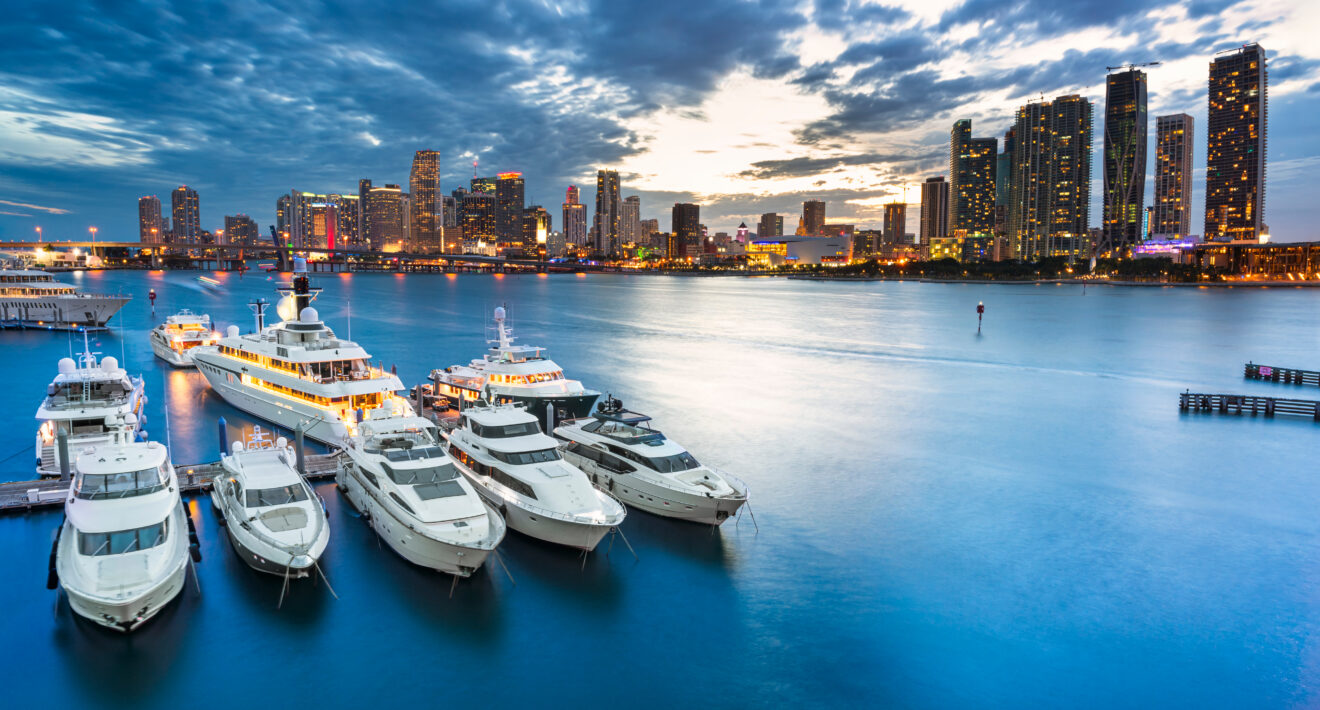
The last engines fell silent just after sunset along Biscayne Bay, but the wake of the Miami International Boat Show lingered long after the yachts departed. For five days, Miami transformed once again into the epicenter of the global marine industry, where shipbuilders, designers, brokers, investors, and luxury travelers converged to preview what the future of life on the water looks like.
From the marinas of Miami Beach to the convention halls of Miami Beach Convention Center and the floating displays at Herald Plaza and Venetian Marina, the 2026 edition of the show felt less like an exhibition and more like a living city built around water. Helicopters circled overhead, tenders shuttled buyers between docks, and invitations were traded as currency in a market where access mattered as much as capital.
This year’s show was defined by a quiet but unmistakable shift. The industry is no longer selling boats. It is selling lifestyle ecosystems.
Buyers today are not asking about top speed first. They are asking about crew quarters, charter yield, brand partnerships, onboard wellness amenities, and resale liquidity. In past decades, ownership was about status. In 2026, it is about experience and utility.
Walking the docks, the difference was immediate. Shipyards showcased hybrid propulsion systems and near silent cruising modes designed for coastal cities with stricter environmental standards. Interiors resembled luxury residences more than nautical cabins. Marble, textured woods, wellness suites, plunge pools, and spa rooms appeared across multiple vessels, even in the sub 100 foot range.
The yacht has become an extension of the luxury hospitality sector.
Manufacturers spoke openly about the rise of dual use ownership. Buyers increasingly intend to use their vessels privately part of the year and charter the remainder. Brokers confirmed that many first time buyers now underwrite their purchase like a real estate investment. Occupancy projections, seasonal demand cycles, and concierge integration are now part of the conversation at the negotiation table.
The charter market itself is evolving alongside this trend. Instead of weekly itineraries alone, operators are building experiences around events, sports calendars, and cultural moments. The Super Bowl, Art Basel, Formula 1, and major music festivals now dictate booking patterns. A yacht is no longer just transportation across water; it is a mobile venue.
Perhaps the clearest example appeared not on the water but in the conversations surrounding it. Real estate developers, hospitality brands, and private aviation firms maintained a larger presence than ever before. Cross industry partnerships dominated discussions. The luxury traveler no longer consumes one product at a time. They move seamlessly between villa, jet, yacht, and curated events.
Miami is uniquely positioned for this convergence.
Unlike traditional yachting capitals, Miami’s marine market operates year round and overlaps directly with entertainment, nightlife, art, and corporate travel. Buyers are not purchasing seasonal leisure. They are purchasing access to a city that functions as a permanent global gathering point.
That reality has transformed the demographic of attendees. The typical image of the retired boat owner continues to fade. Younger entrepreneurs, athletes, content creators, and private equity groups walked the docks with intent. Many were less interested in personal recreation and more focused on brand building, experiential hosting, and revenue generation.
A noticeable number of deals discussed at the show were not individual purchases but partnerships. Fractional ownership groups, hospitality operators, and asset management firms explored structured models allowing shared usage and operating efficiency. The yacht is increasingly viewed similarly to commercial real estate, an asset capable of both personal enjoyment and financial performance.
Technology reinforced that shift. Digital booking platforms, integrated crew management software, and predictive maintenance analytics were featured across multiple exhibitors. These tools reduce downtime and increase charter reliability, a crucial factor as charter clients become less tolerant of uncertainty and more accustomed to hotel level consistency.
Environmental responsibility also moved from marketing language to operational reality. Electric tenders, solar assisted energy systems, and advanced wastewater management systems were widely implemented. European shipyards in particular emphasized compliance readiness with upcoming coastal regulations in major cities. Buyers now ask how vessels will perform five years from now, not just today.
Despite the business undertone, the spectacle remained unmistakably Miami. Music drifted across the water. Invitations circulated for private dinners aboard newly delivered vessels. Sunset cocktail hours blurred into late night negotiations. Deals often concluded away from conference tables and under string lights along the docks.
What stood out most was the confidence in demand. Even amid broader economic uncertainty globally, luxury travel appetite remains strong. Brokers repeatedly referenced a stable high net worth buyer pool and continued charter demand growth in major experiential destinations. Miami’s position as both a gateway to the Caribbean and a cultural capital reinforces its resilience.
The Miami Boat Show has always been a showcase of craftsmanship. This year it felt more like a blueprint of the luxury economy’s direction. The marine industry is aligning itself with hospitality, events, and lifestyle services, turning ownership into participation rather than possession.
When the final vessels departed and crews dismantled the temporary city on water, what remained was a clear message. The next decade of yachting will not be defined by size alone but by integration. The yacht is becoming part of a broader network of experiences where travel, entertainment, and investment intersect.
In Miami, that future is already underway.